How to Make a Perler Bead Spider Web Pattern
This post contains affiliate links. If you buy through them, the site may earn a small commission at no extra cost to you. Disclosure.
See how you can make a Perler bead spider web pattern using fused beads. The finished craft is perfect for hanging up as Halloween decor and also to use as unique toppers for Halloween cupcakes too.
Kids and adults can have a ton of fun with Halloween crafting by making some fun, spooky spider webs from fused beads such as Perler and Hama. This how to page has step by step images to show how you can easily make this creepy cobweb pattern.
Once the spider web is complete, you can hang them up as fun decor for the home. They make ideal window or Halloween tree ornaments with an addition of a loop of string or ribbon. Spook any guests coming to trick or treat with these hanging in the front porch.
Note: This post may contain affiliate links for which I can be compensated.
How to Make a Perler Bead Spider Web Pattern: Ideal Halloween Craft
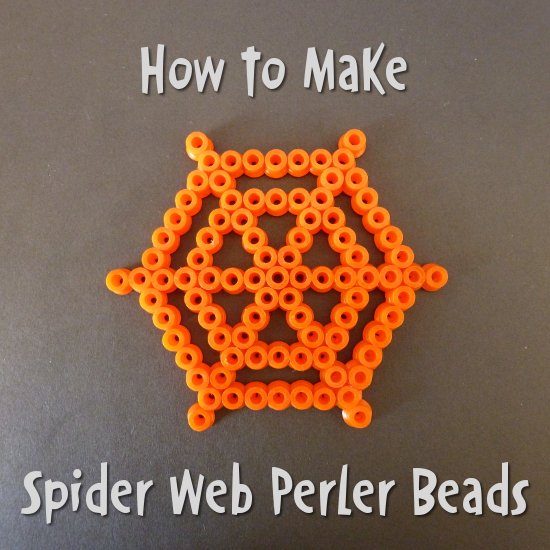
Perler bead spider webs are best made from one solid color. I've made loads of these webs and the best ones, if you want them for Halloween, are made from solid colors such as black, bright pumpkin orange and monster green.
For a different look, you could also make these cobweb designs out of clear beads which would give a more realistic effect. Examine the pictures below along with the text to be sure of the instructions.
Hexagonal, 6 Sided Fused Bead Boards are Best for Spiderwebs
Spider webs or cobwebs (which are abandoned webs that spiders no longer use) are best made from hexagonal peg boards. This is because the web shape is much easier to make using a hexagonal Perler bead board and they look better too.
I use the small hexagon peg boards. You can also get large peg boards and apply the exact same method with those too so you make even bigger designs.
Step 1: Building the Structure of the Web
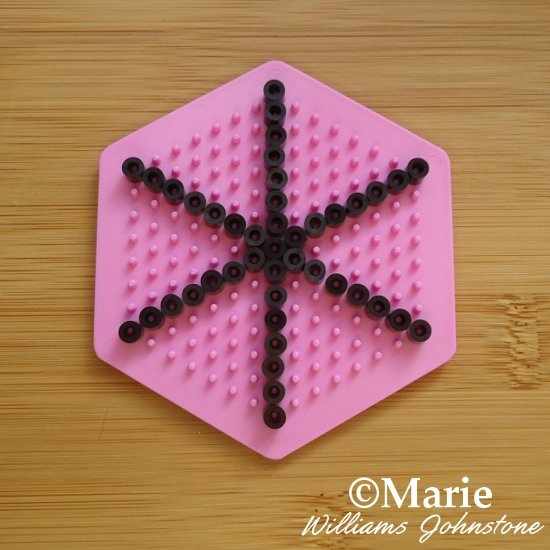
Image Credit: photo belongs to the author.
Whether you use a large or a small hexagonal peg board, you will find it so much easier if you place it in front of you with one of the pointed corners in the middle. This is very important and I suggest you do position the board as it is shown in the image of Step 1.
Start by making a complete straight line of your choice of fused beads (Perler, Hama or other) from the most bottom point in the corner, right the way up to the top. This makes a straight, vertical line right through the middle of the pegboard.
Next, add in 2 diagonal lines in a cross shape. Start from the top right corner and make a line of beads down to the bottom left corner.
Then start from the top left corner and make a straight line down to the bottom right corner. Your pattern should then look like the image shown here in step 1.
Step 2: Adding the First Circle of Beads
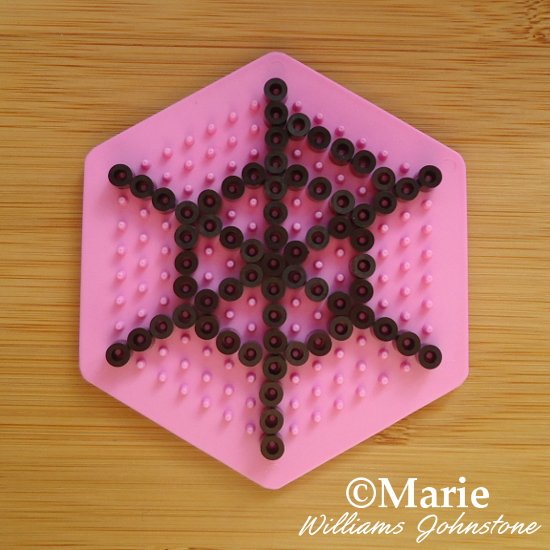
Image Credit: photo belongs to the author.
Weave in the 'Threads' with the Beads
Now the structure of the spiderweb pattern is in place, you will see a basic star pattern with 6 long branches. This branch design forms the basic building block upon which you can weave in your web threads with the Perler beads.
I like to make two almost circular patterns over the top to fill in the web design but you could make more of a spiral design or something a bit different. If you're using a large hexagon pegboard then you do have more room to be creative with it all.
Starting from the 4th row up from the bottom of a small board, work your chosen color of fused beads all around in a circular design as shown. With a larger board, you will choose where to place the circular sections.
Step 3: Adding the Final Piece to the Cobweb
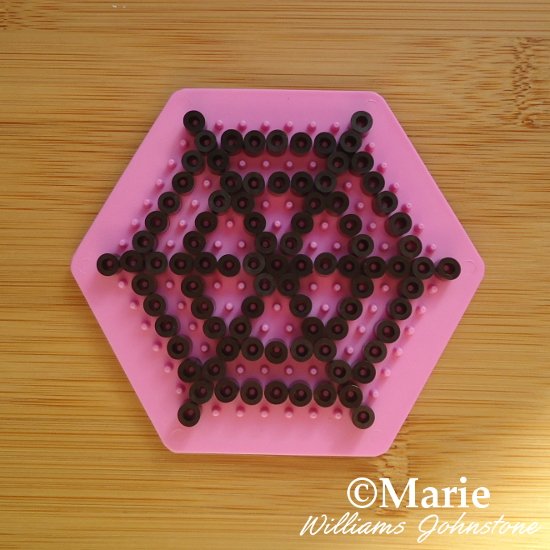
Image Credit: photo belongs to the author.
Add a Second 'Circle' of Beads to Complete Your Design
Starting from the 2nd row up on a small pegboard, add in the beads all around the design in a circular motion. That means you stick to that row all the way around the pattern. You can see from my image that this completes the spiderweb design.
CLICK HERE FOR MORE Perler Bead Halloween Patterns
These spider webs can be a little difficult to iron since they consist of lots of areas with just 1 bead. You need to be sure that the beads are properly fused together when an adult irons them.
To make this easier, you can fill in all the empty pegs with some clear or transparent beads which will not detract from your design (especially with a strong color like black) and will make it easier to iron.
Another Idea for Your Fused Bead Spider Webs
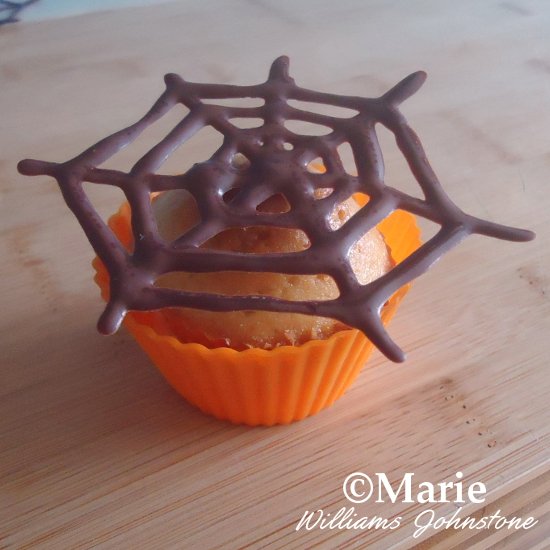
Image Credit: photo belongs to the author.
What About Halloween Themed Cupcake Toppers?
The cupcake image here shows one of my chocolate spiderweb toppers that I have used to decorate my cupcakes for the Halloween season. Making these chocolate toppers can be fiddly and time-consuming.
You can use your completed Perler bead spiderwebs made on a small hexagon pegboard to create exactly the same effect. I tested the size against a standard cupcake and it is perfect.
Just use the wet frosting or icing on top of a cupcake to keep the completed Perler pattern in place. Of course you can easily use them for hanging ornaments too by adding a loop of string or ribbon.
Some Completed Spiderweb Perler Designs in Halloween Colors
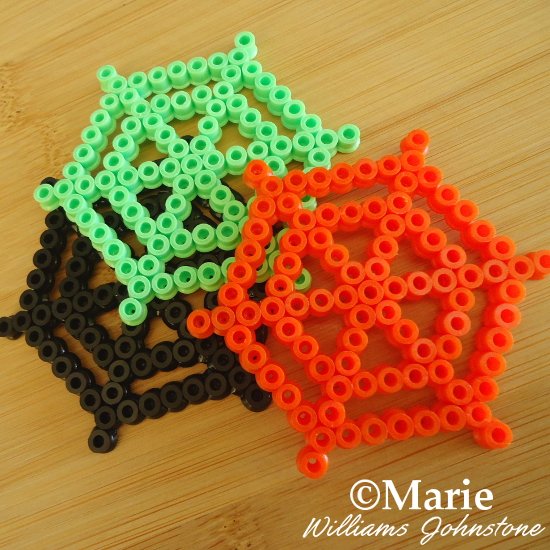
Image Credit: photo belongs to the author.
Kids and adults who love spiders can enjoy this craft at any time of the year. Making a web from clear or light color glitter Perler beads would look really nice. It can be hung up as a window ornament where any glitter bits would catch the light.
Related Content You Should Also Love:
Kids Craft: How to Make a Paper Spider Web
How to Decorate Spider Cupcakes
How to Make Spider Pom Poms Craft Tutorial
More Perler Bead Crafts
Perler Bead Spider Web Pattern in 4 Steps
Updated October 2026: summary, ironing tips and FAQ added by the Just Halloween Crafts team.
A Perler bead spider web is three straight lines of beads crossing in the middle of a hexagon pegboard, with two rings of beads woven between them, fused with an iron. Here is the whole pattern in brief:
- Turn a hexagon pegboard so one point faces you, then lay a straight line of beads from the bottom point to the top point.
- Add two diagonal lines corner to corner so you have six spokes meeting in the center.
- Fill in two rings of beads between the spokes, one near the middle and one near the edge.
- Cover with ironing paper and iron, then flip and iron the back lightly so the web is strong enough to hang.
Ironing Tips for a Strong Web
Spider webs have lots of thin lines, so they are more fragile than solid designs. Iron with gentle, circular movements on a medium setting until the beads just start to merge, then lift the paper and check. A web that is fused a little more than usual on both sides is less likely to snap at the spokes. Press it under a heavy book while it cools to keep it flat. Ironing is a job for an adult or an older child with supervision.
Ideas for Your Finished Webs
- Window and tree ornaments: thread a loop of fishing line or ribbon through one of the outer beads.
- Cupcake toppers: wash the fused webs and press one into the frosting just before serving, or make toppers you can actually eat with our edible Halloween crafts and spider cupcake ideas.
- Magnets and keychains: glue a small magnet to the back or add a key ring through an outer bead.
For more patterns, see our Halloween Perler bead patterns, and for paper projects you can print at home, our roundup of free printable Halloween crafts.
Perler Bead Spider Web FAQ
Can I make a spider web on a square pegboard?
Yes, but it is harder to keep the spokes even. Use the diagonal lines of the square board for four of the spokes and the middle row and column for the rest. A hexagon board gives the neatest six-sided web with the least counting.
How many beads does a spider web take?
It depends on the size of the board and how many rings you add. Count as you lay the spokes and fill a small cup with a few extra beads of the same color before you start, so you are not hunting for matching beads halfway through.
Are Perler beads safe for young children?
Standard fuse beads are small parts and are not suitable for children under three. Larger beads made for younger children are available, and a grown-up should always do or supervise the ironing.