The Best Fabric for a Cloak or Cape (and What to Avoid)

The fabric you choose decides almost everything about a cloak: how it hangs, how warm it is on a cold October night, how easy it is to sew and how much it costs. A cheap fabric that drapes well can look far more impressive than an expensive one that sticks out stiffly from the shoulders.
Below we compare the fabrics most people consider for a costume cloak or cape, with honest notes on what each one is like to work with. If you're making your first cloak, the short answer is fleece. If you want drama, it's velvet. Everything else sits somewhere in between.
What Makes a Good Cloak Fabric?
Before looking at individual fabrics, it helps to know what you're judging them on.
- Drape. A good cloak falls in soft folds from the shoulders. Fabrics with drape feel heavy and fluid when you hold them up; stiff fabrics stand away from the body.
- Weight. Some weight helps the cloak hang well and stops it flying up in the wind. Too much weight pulls on the neckline, especially for children.
- Fraying. Fabrics that fray need every edge finished. Fabrics that don't fray can be left raw, which saves a lot of time.
- Ease of sewing. Slippery or stretchy fabrics shift under the needle. Stable fabrics stay put.
- Width. Cloaks use a lot of fabric. Wider rolls (around 60 inches or 150 cm) often let you cut a whole cloak in one piece.
The Best Fabrics for a Cloak, Compared
Fleece: the best choice for beginners
Polar fleece doesn't fray, so hems are optional and the hood edge can be left raw. It is warm, washable, inexpensive and comes in wide widths. It also forgives wobbly seams, because the soft pile hides them. The downside is that fleece can look a little casual and doesn't have the glossy drape of velvet. For a child's costume that will be worn trick or treating in the cold, it's hard to beat.
Velvet and velour: the most dramatic
Nothing looks quite as rich as a velvet cloak catching the light. Crushed velvet and stretch velour are cheaper than traditional velvet and still look luxurious. They drape beautifully, but they also slip and creep when you sew them. Use plenty of pins, sew slowly and press from the wrong side with a low iron (or not at all) so you don't flatten the pile.
Cotton drill, twill or poplin: easy but plain
Cotton is the easiest woven fabric to sew. It doesn't slip, it presses crisply and it's widely available. Heavier cottons like drill or twill hang reasonably well; light poplin can look a bit flat. Cotton is a good choice for a lined cloak or for a fancy dress cape that needs to survive a school day.
Satin and taffeta: shiny, but tricky
Satin gives a vampire or villain cape that classic sheen, especially in black or deep red. It also frays badly, slides around and shows every pin hole. Many people use satin only as a lining, inside a hood or as the contrast side of a reversible cape, which gives the look with less of the frustration.
Wool and wool blends: warm and authentic
Wool melton or a wool-blend coating fabric makes a cloak that looks medieval and keeps out the cold. It is heavy, so it suits adults better than young children. It is also the most expensive option here, and you may need a heavier needle in your machine.
Felt: fine for small capes
Craft felt doesn't fray and is easy to cut, but it comes in small pieces and tears more easily than fleece. It is perfect for a small cape for a toddler or a doll, and for appliqué details on a bigger cloak.
Old curtains and bed sheets: the thrifty option
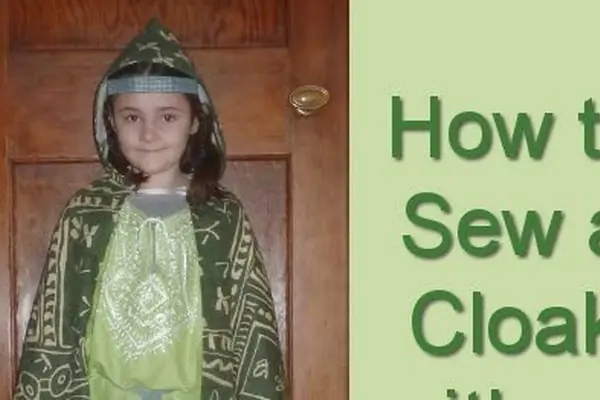
Heavy curtains are often wide, lined and have a lovely drape, which is exactly why the cloak in our no-pattern cloak tutorial was made from one. Check charity shops and your own linen cupboard before you buy new fabric.
Fabrics to Avoid
- Thin polyester costume satin. It is cheap but static-prone, crackly and see-through when light shines behind it.
- Very stiff fabrics such as canvas or upholstery fabric with a rubber backing. They stick out like a tent rather than draping.
- Loose-weave or open fabrics such as hessian (burlap). They fray as soon as you look at them and shed fibers everywhere.
- Anything flammable near open flames. All costume fabrics can burn, but fluffy and loose fabrics catch quickly. Keep cloaks well away from candles and jack-o'-lanterns lit with real flames.
How Much Fabric Do You Need?
For a simple circle or half-circle cloak, measure from the top of the shoulder to where you want the hem to fall. That's the length. As a rough guide, a half-circle cloak needs a piece of fabric about twice the length wide and a little more than the length deep. A full circle cloak needs about twice as much again, usually in two pieces joined at the back.
A hood takes an extra piece of roughly 25 by 15 inches (60 by 40 cm) for a child, more for an adult. Always buy a little extra for mistakes, especially with velvet, where the pile needs to run the same direction on every piece. Our tutorial on making a hood for a cloak explains how to measure for it.
Lining: Is It Worth It?
A lining hides the seams, makes the cloak look finished from every angle and lets you add a flash of contrast color. It also doubles the fabric cost and the sewing time. For a costume that will be worn once or twice, an unlined cloak in a non-fraying fabric is perfectly fine. For a cloak you want to keep for years, or for a reversible design, lining is worth the effort.
Quick Recommendations
- First cloak, child's costume: fleece.
- Wizard or vampire with the wow factor: crushed velvet with a satin-lined hood.
- School dress-up day: cotton drill or an old curtain.
- Medieval or fantasy costume for an adult: wool blend.
- Toddler or doll cape: felt.
Frequently Asked Questions
What color is best for a witch or wizard cloak?
Black is the classic choice, but deep purple, bottle green and midnight blue photograph better at night, because black can lose all its detail in photos.
Can I make a cloak from fabric that frays?
Yes, just finish every raw edge with a zigzag stitch, an overlocker or a narrow double hem. Pinking shears help too, though they don't stop fraying completely.
Is fleece too hot for a cloak?
Indoors at a party it can be warm, but on a cold evening outdoors it's ideal. Lightweight "micro fleece" is a good middle ground.
Once you've chosen your fabric, follow our steps to sew a cloak without a pattern, make the hood and sew the hood onto the cape. You'll find more sewing projects in our felt and fabric crafts section.